Map how the hallway is used
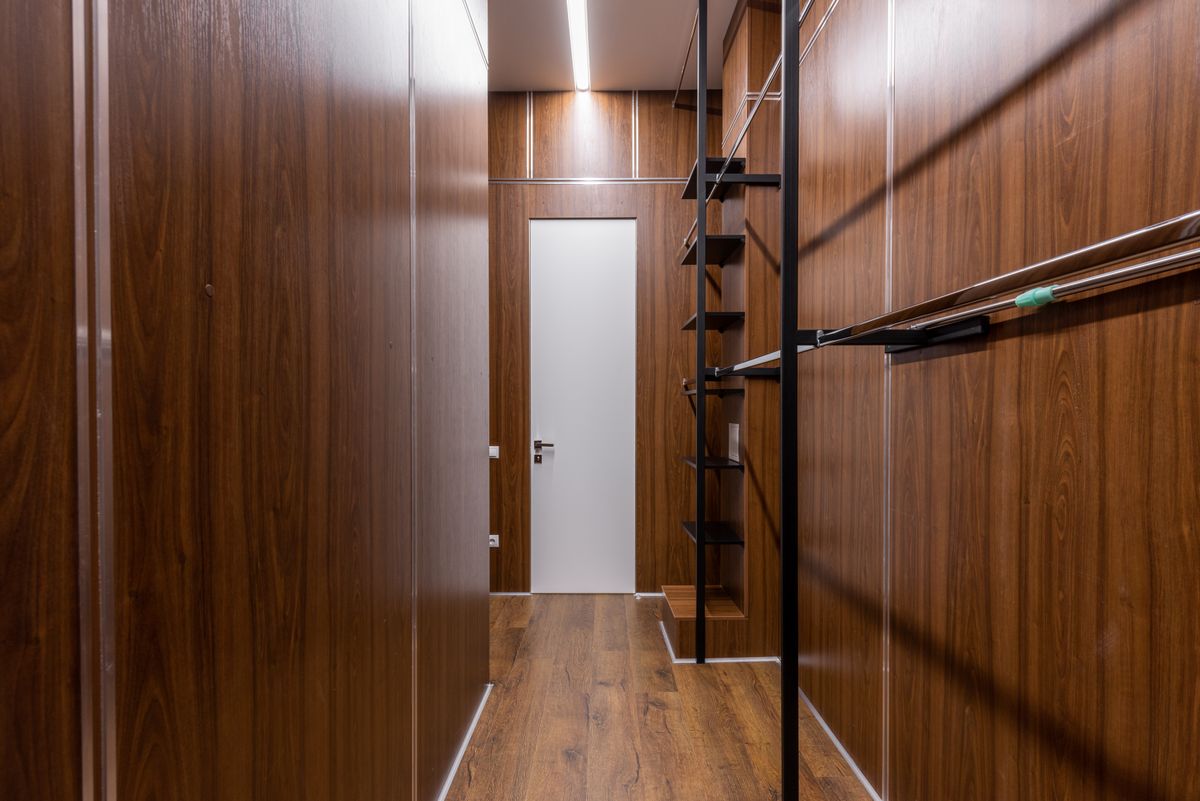
Open nearby doors and note their swing. Walk through carrying the bag, laundry basket or buggy you normally use. The smallest gap along the route is more important than the widest stretch of empty wall.
Measure skirting boards, radiators and other projections. Do not cover a heater, vent or service access point. A unit placed beside a radiator also needs to meet the radiator and furniture manufacturers' clearance requirements.
Test a footprint without fixing anything
Mark a possible storage footprint temporarily with paper while supervising the test, then remove it. Try a shallow open rack or a small movable basket only if it remains stable and does not narrow an escape route. Do not choose tall furniture simply because its footprint is small.
Some freestanding furniture still requires wall anchoring. If you cannot safely install the specified fixing under the tenancy terms, choose a different item rather than omitting the anchor. Ask the landlord about permitted fixings when necessary.
Keep only entrance essentials here
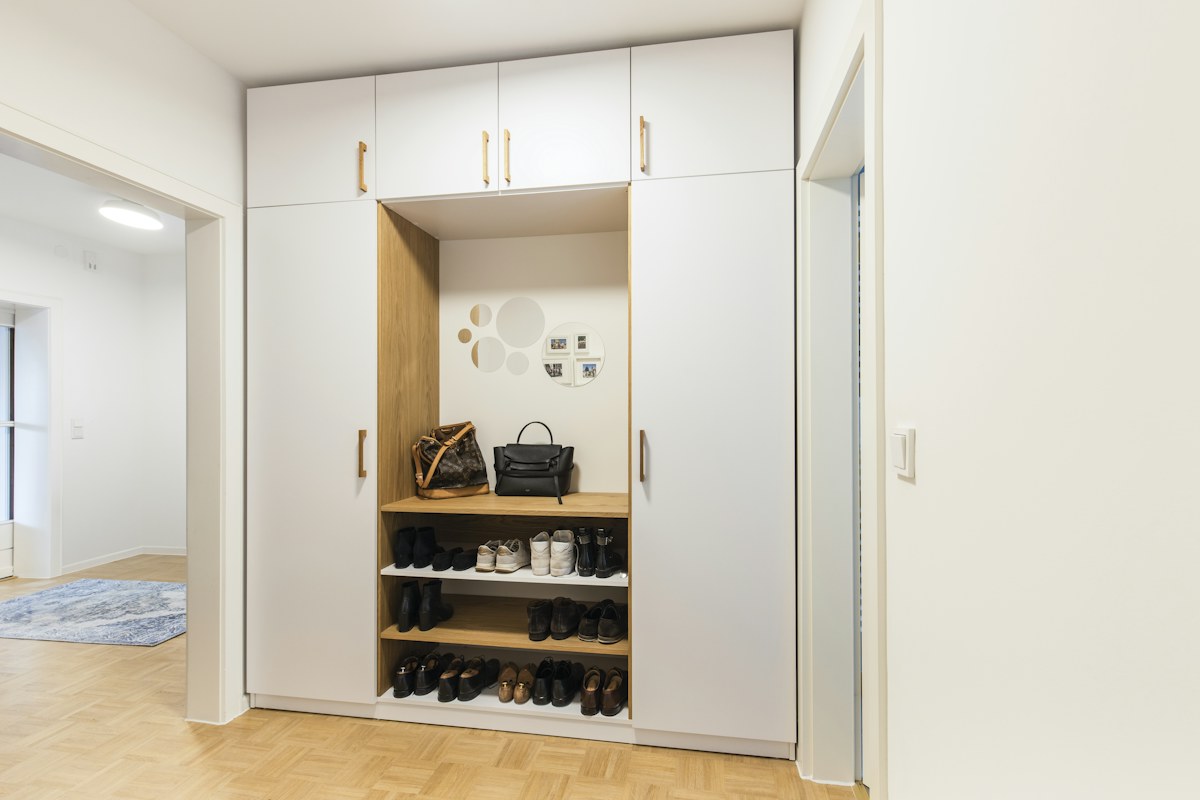
Give the hallway a limited job: today's shoes, a bag and the things needed on the way out. Store occasional equipment elsewhere. An over-door organiser may be useful only if it suits the door, clears its frame and does not interfere with proper closing or a fire door's function.
Before you call it done
- Doors still open and close normally.
- The route stays clear during daily use.
- Any furniture can be installed as its maker requires.
Know the limit. Do not modify fire doors, obstruct escape routes or skip required furniture anchoring to avoid making holes.