Start with the door open
Open the front door fully and walk the route you normally take with shopping. Note where the door swings, where a buggy needs to turn and where shoes currently spill into the path. Keep that route clear. A deep unit that fits against the wall can still be awkward if its doors open into the passage.
Measure the usable space after allowing for the skirting board and door swing. Mark a possible rack footprint with paper on the floor, then try the route again. Remove the paper after the test so it does not become a slipping hazard.
Separate wet arrivals from dry storage
Put a shallow, washable tray where muddy shoes can drain without soaking the flooring. Check underneath it regularly; a tray can conceal grit or trapped moisture. Let shoes dry according to their care instructions before putting them into a closed cupboard.
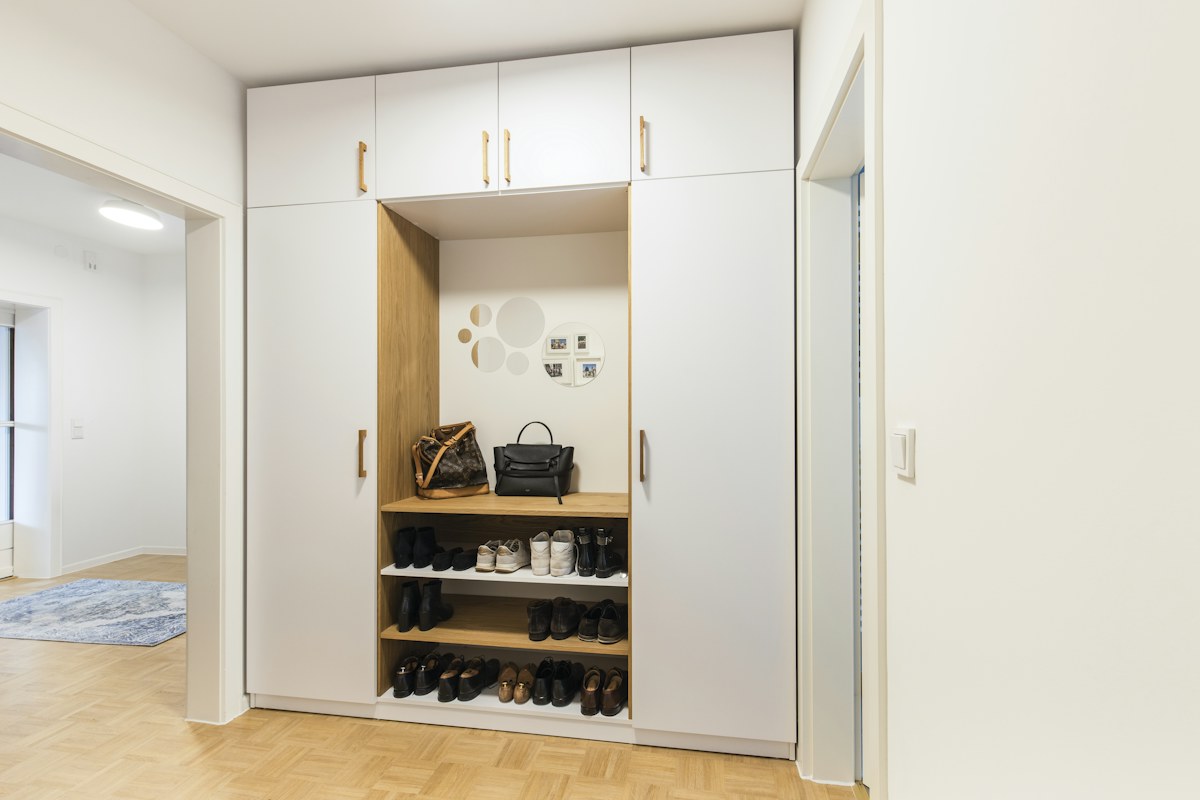
Use an open rack for the few pairs worn most often. Keeping every seasonal pair by the door turns a small landing zone into a permanent sorting job. Store occasional shoes elsewhere, clean and dry.
Give the system a realistic limit
Allocate a small section to each person rather than a perfectly styled arrangement that nobody can maintain. Try it for a week before buying more storage. If the floor fills up again, reduce the number of pairs at the entrance or move the tray closer to where shoes actually come off.
Before you call it done
- Door and walking route remain clear.
- Wet shoes have a washable landing spot.
- Daily pairs fit without stacking into the passage.
Know the limit. Follow any furniture anchoring instructions. Do not place storage across an exit or rely on a lightweight rack for sitting.