Clear the space your task needs
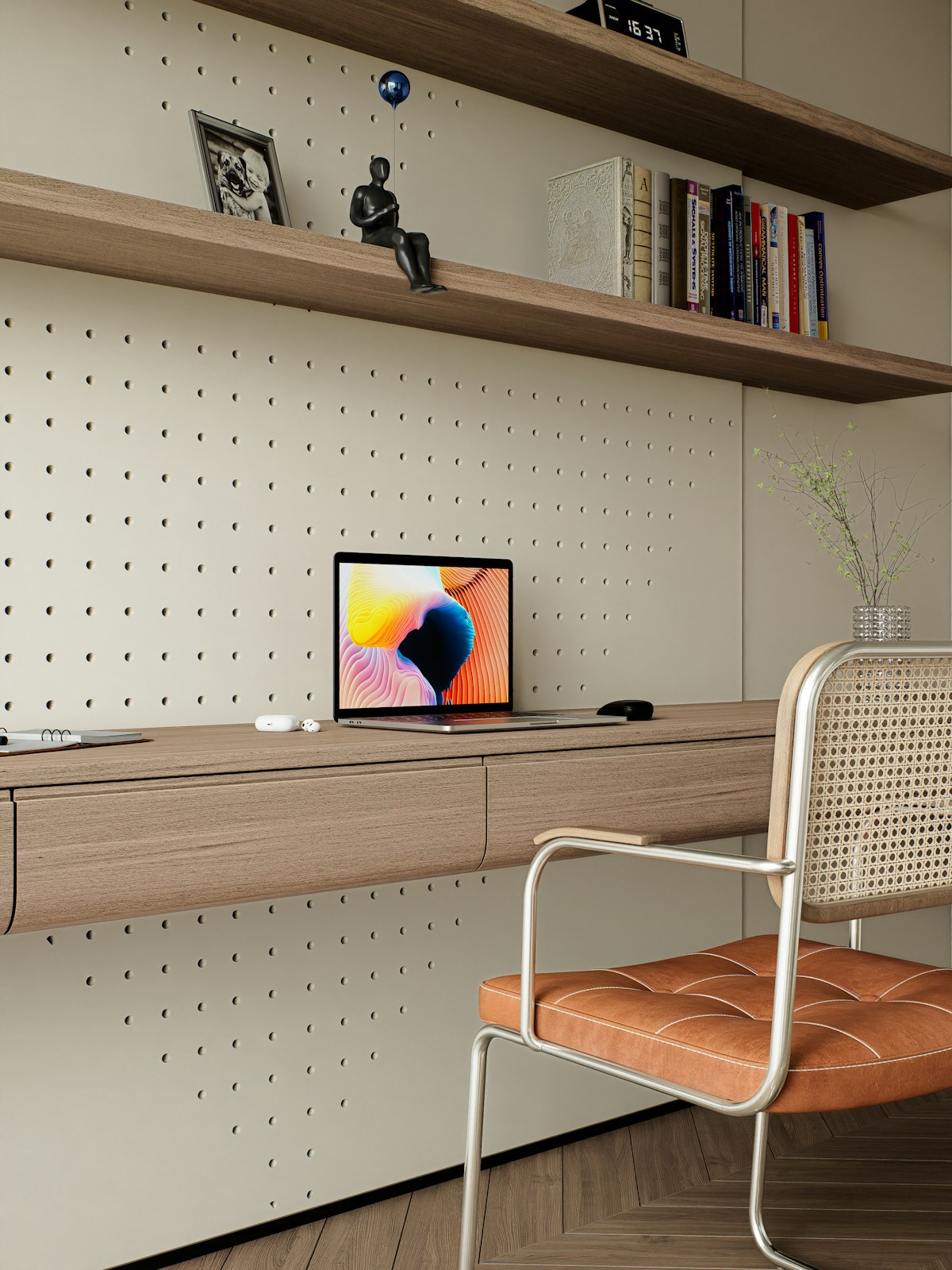
Remove everything except the equipment needed for one typical task. If you use a laptop and notebook together, open both and arrange them as you actually work. Keep a comfortable position rather than squeezing the notebook into the last narrow strip beside the keyboard.
Notice where your forearms rest and where the chair moves. A storage box below the desk can look efficient while leaving nowhere for your feet. Keep that space clear and check that drawers can open without hitting the chair.
Give small objects one home
Choose one modest container for pens and other daily tools. Put spare stationery in a drawer or a nearby cupboard. A desk does not need to hold an entire household supply simply because those objects relate to work.
Place loose papers in a single tray with a clear next action. Separate reference documents from items needing attention so the tray does not become an archive. Keep drinks away from electronics and from the path your hand takes to reach a mouse or notebook.
Make the reset shorter than the task
At the end of a session, return the daily tools to their container and remove things that belong elsewhere. Leave one clear note for the next task if useful. If resetting takes a long time, reduce the number of objects on the surface rather than adding another elaborate organiser.
Before you call it done
- The main working area is clear.
- The chair and your feet have room.
- Papers needing action have one visible place.
Know the limit. Keep equipment vents clear and avoid trapping or tightly bending cables. Cable tidying does not make an overloaded electrical supply safe.