Start with the space and the child
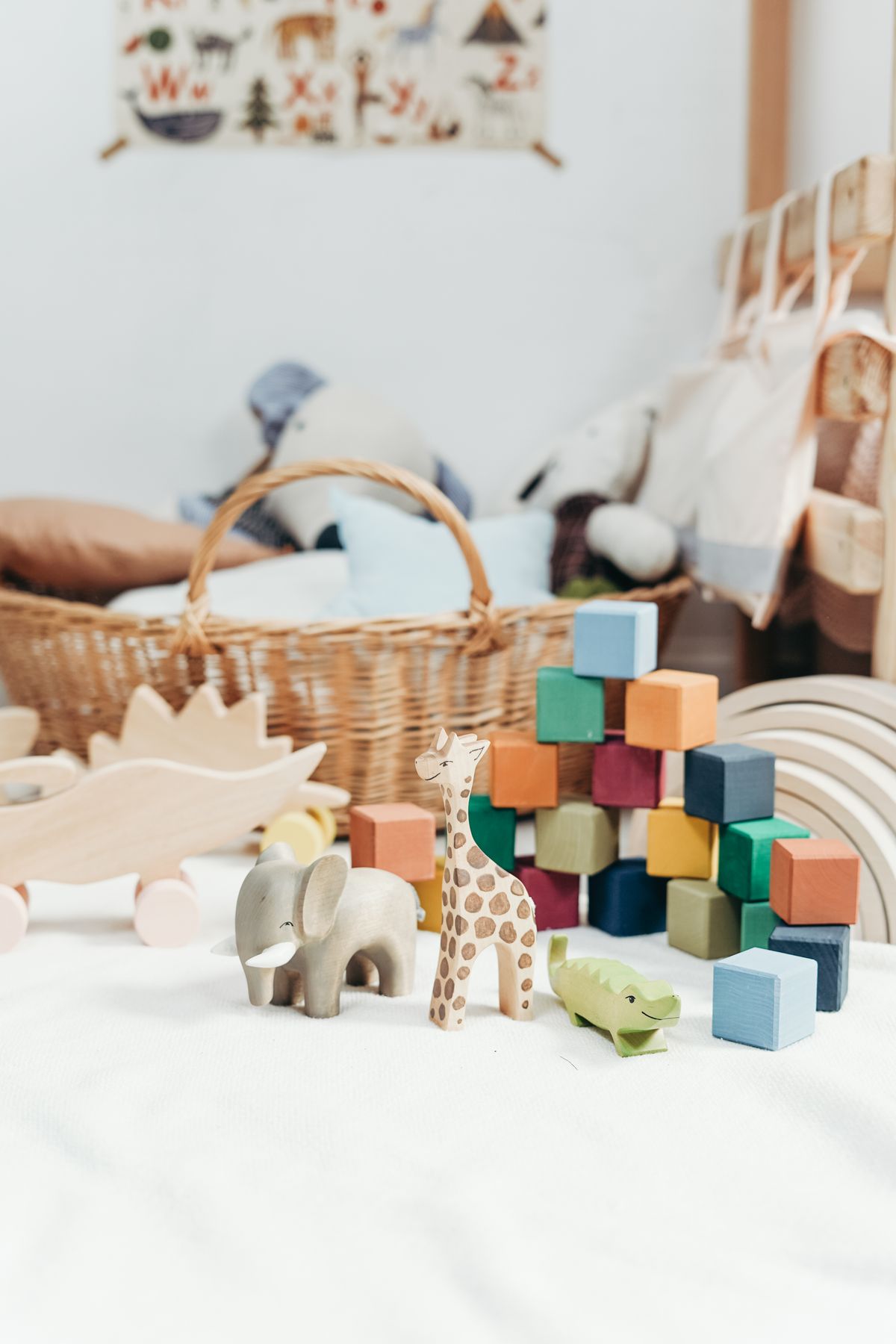
Choose a small selection that suits the child's age and interests. Keep a well-loved toy available rather than removing it simply to follow a schedule. Sort loose parts with their matching set and check for breakages while the toys are out.
Use the maker's age guidance, especially where younger children share the room. A storage system must not make small parts accessible to a child for whom they are unsuitable. Keep packaging, bags and damaged items out of the play collection.
Make putting away straightforward
Use low, manageable containers with a clear purpose: blocks in one, vehicles in another. Picture labels can help a child recognise the contents without needing a detailed adult filing system. Avoid overfilling so that returning a toy does not require a careful balancing act.
Keep the reserve group clean, dry and separate from daily play. Label it with the contents rather than relying on memory. Choose containers and lids appropriate for the household, and follow any product warnings concerning entrapment or access.
Rotate in response to use
Swap a small group when interest fades or the room becomes difficult to reset. There is no need to change everything on a fixed day. Watch which containers repeatedly spill out; the problem may be a poor fit or too many pieces rather than a lack of tidying effort.
Before you call it done
- Toys match the children's ages and abilities.
- Sets and loose parts stay together.
- Daily containers are not packed to the brim.
Know the limit. Secure storage furniture as instructed. Avoid heavy lids, climbable arrangements and accessible small parts that create hazards for young children.