Check the panel and the product limits
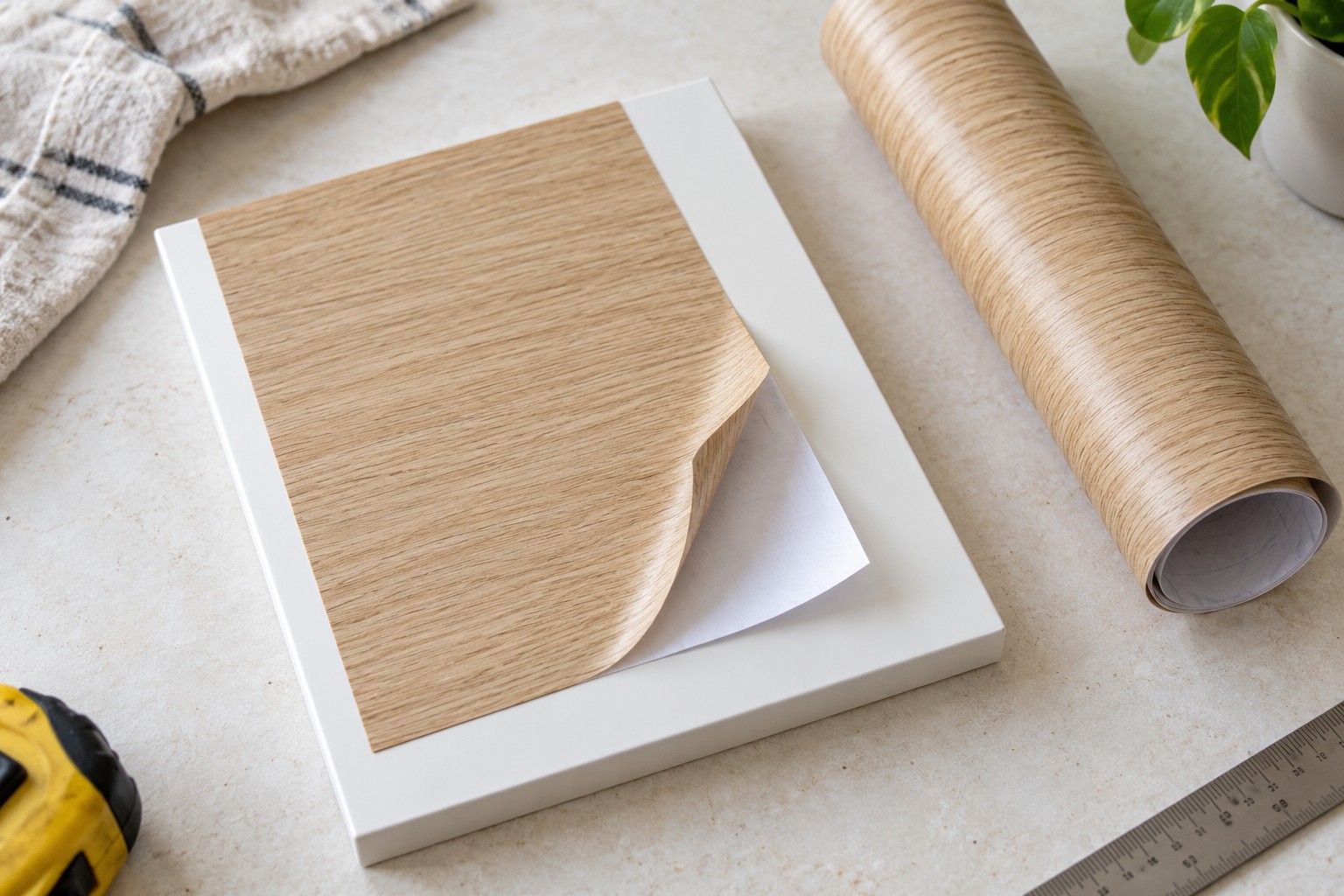
Identify whether the panel is painted, laminated, veneered or unfinished, then compare it with the film maker's permitted surfaces. Look for loose coating, swelling, sharp chips or heat exposure that would make the location unsuitable. Ask permission before changing rented or borrowed furniture. Film is a decorative covering, not a repair for damaged board. Read restrictions around heat, moisture and food contact, and do not use a furniture product as an appliance covering unless explicitly permitted.
Make a small realistic test
Choose an inconspicuous finished area with the same surface as the visible panel. Prepare it exactly as instructed, allowing any permitted cleaning moisture to dry. Apply a small piece without stretching it and follow the stated smoothing method. Leave it for the intended test interval, then examine adhesion, bubbling, colour change and the effect of removal. A test on a raw underside will not represent adhesion to a coated door front.
Plan edges before covering the face
Measure the panel and consider how the film must finish around corners, handles and moving gaps. Make a paper template if the shape is awkward. Cut on a separate protected surface, not against the furniture with a blade. Follow the product sequence for backing removal and smoothing, keeping the film out of hinges and closure lines. Do not use heat unless the film and surface instructions specifically call for it. Keep any offcut and product label for matching a future replacement.
Before you call it done
- Test a hidden area with the same finish.
- Keep film out of hinges and moving gaps.
- Cut separately on a protected surface.
Know the limit. Do not cover damaged material, heat-producing equipment or safety labels with decorative film.