Check the threshold clearance
Open the door fully and note the space between its lower edge and the floor. A thick mat can catch, curl or interfere with closing. Check both sides of the threshold if you plan to use an outdoor scraper mat and an indoor absorbent one.
Choose a size that leaves the walking route clear and lies flat on the intended surface. Avoid stacking mats to make up a height difference. A mat should not disguise a damaged threshold or loose paving that needs attention.
Match the material to the location
Use a product intended for outdoor conditions outside and check its drainage and cleaning guidance. A sheltered porch and an exposed step are different environments. Some fibres and backings deteriorate if they remain wet, even when the top looks reasonably clean.
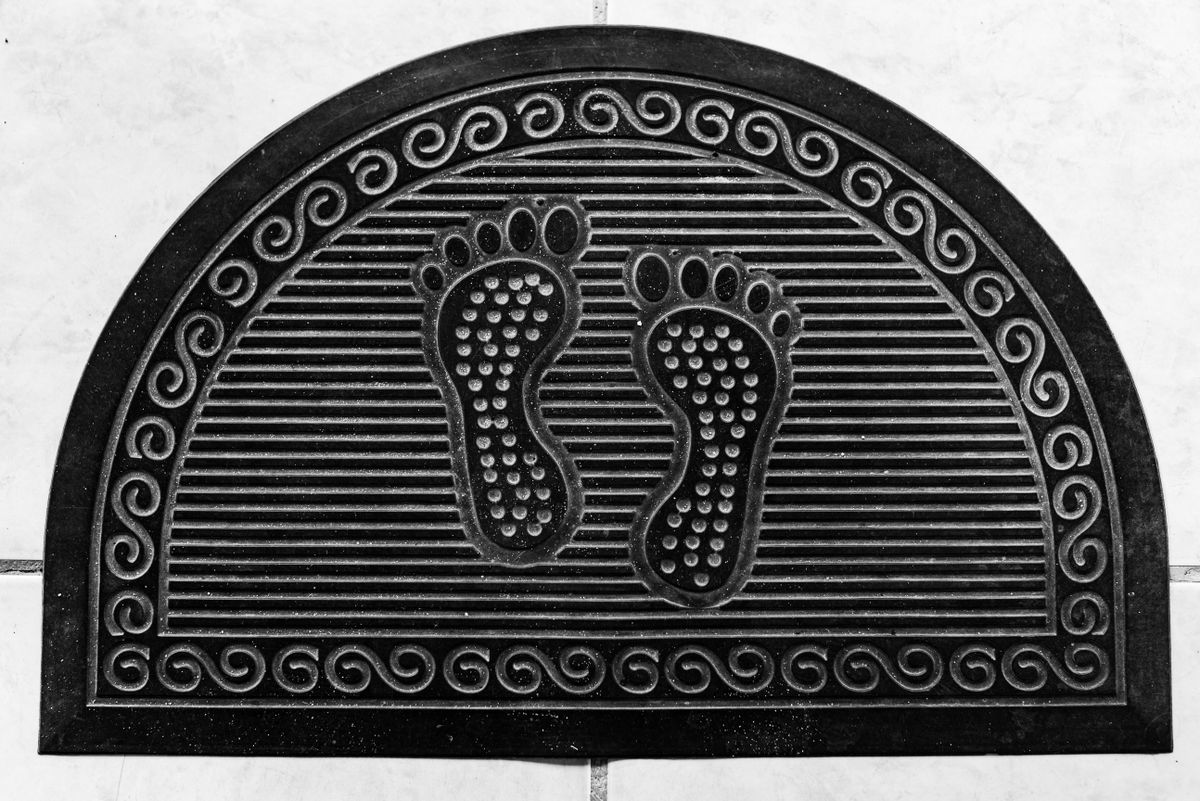
Indoors, check that the backing is suitable for the floor finish and stays stable. Rubber or plastic backing can affect some surfaces, so follow both the mat and flooring guidance rather than assuming all non-slip materials are compatible.
Clean beneath as well as above
Lift the mat regularly when it is safe to do so and remove trapped grit. Let the mat and the surface below dry as needed before replacing it. Deal with curled edges or a slipping backing promptly. A clean flat mat is useful; a saturated, bunched-up one can create a new problem at the busiest point of the house.
Before you call it done
- The door opens and closes without catching.
- The mat lies flat and stays stable.
- The material suits the floor and weather exposure.
Know the limit. Do not obstruct an exit or alter a fire door to accommodate a mat. Replace a mat that cannot remain flat and secure.