Put only dry linen away
Check that thick seams and corners are fully dry before folding. A towel that feels dry on the surface can still hold moisture in a folded edge. If the cupboard smells musty, empty it and look for a dampness or ventilation problem rather than covering the smell with fragrance.
Wipe dusty shelves with a method suitable for their finish and let them dry completely. Avoid packing fabric against a visibly damp wall. A cupboard containing a hot-water cylinder also needs the clearances and access specified for that equipment.
Group by the bed or the job
Keep each bedding set together, with a label or visible size marking where different beds use similar-looking sheets. A matching pillowcase can hold a fully dry set if it remains loose enough to handle. Put guest bedding above or behind the sets used every week.
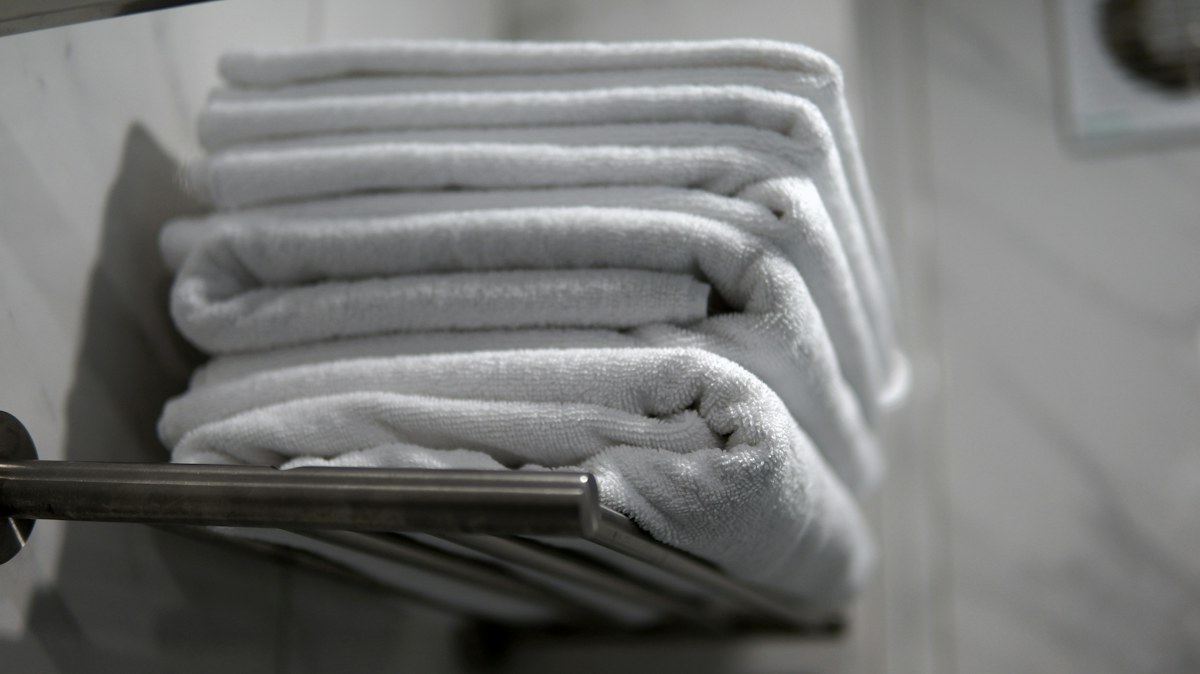
Keep towel stacks low enough to remove one comfortably. Smaller piles beside each other are usually more manageable than a single tall tower. Place the items you use most often within an easy reach rather than reserving the best shelf for display.
Use the changeover as a check
When you replace a set, look for worn elastic, thinning areas and missing pieces. Keep only a realistic number of spares for your household. A small gap on each shelf makes it easier to see what is available and to put freshly washed linen back without forcing it in.
Before you call it done
- Everything is fully dry before storage.
- Bedding sizes are easy to identify.
- Shelves and any equipment remain accessible.
Know the limit. Do not cover ventilation grilles, controls or pipework that requires access. Follow equipment instructions where an airing cupboard contains services.