Choose one activity for the box
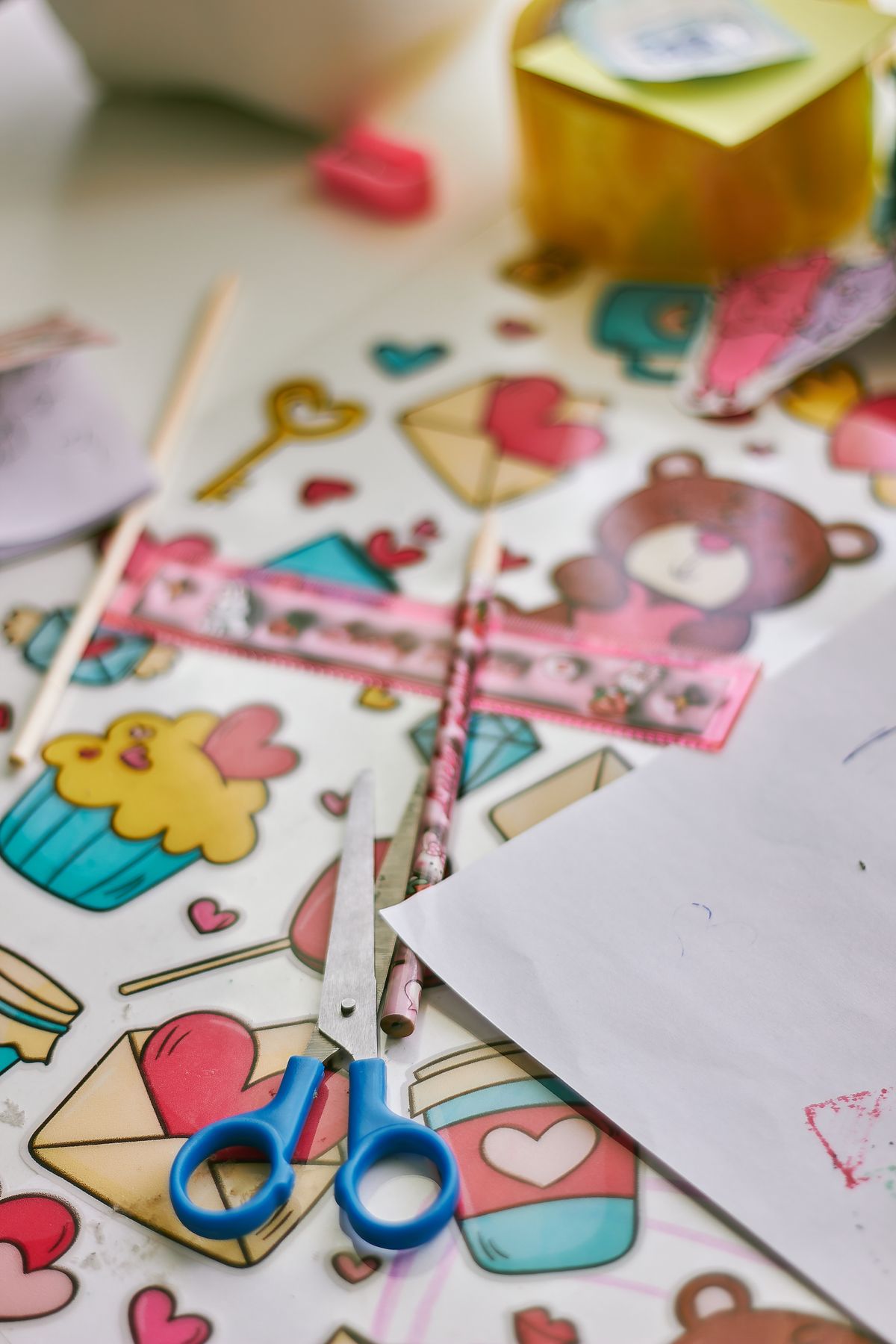
Start with the materials for a common activity such as paper cards or simple drawing. Group scissors, paper, pens and suitable adhesive, rather than mixing every craft you might try into one deep container. Keep paints or products requiring particular storage according to their labels.
Check supplies while sorting. Replace missing caps, separate dried-out pens and deal with damaged tools. Do not keep a leaking bottle simply because there is still some product left inside it.
Protect tools and small pieces
Use shallow inner containers so small parts stay visible. Keep sharp tools protected and suitable for the intended user. If children use the box, remove items that are not age-appropriate rather than relying on a label they cannot read.
Store paper flat where possible and keep damp materials away from it. A small folder for offcuts is useful only if the pieces are large enough for real projects. Let the folder's capacity limit the collection instead of allowing scraps to fill every gap.
Give unfinished work another home
Use a separate flat folder or tray for a project in progress, with a brief note of what remains to do. This keeps the everyday supplies accessible without disturbing delicate work. At the end of a session, return tools and close the box without pressing down on its lid; if it will not close, reduce the contents.
Before you call it done
- The box serves a recognisable activity.
- Sharp tools and small parts are appropriately secured.
- Unfinished work is separate from loose supplies.
Know the limit. Follow adhesive and art-material warnings, including ventilation and age restrictions. Household storage does not make hazardous materials suitable for children.