Read compatibility before the promise
Start with the intended surfaces and exclusions, not the large claim on the front. A cleaner for tiles may be unsuitable for natural stone, while a product for a worktop may not be approved for food-contact use without rinsing. Check the exact surface or appliance instructions too. If the two sets of guidance conflict, do not experiment on the visible area. Ask the relevant manufacturer or choose a clearly compatible alternative.
Follow the complete sequence
Read dilution, application method, ventilation, protective measures, contact time and rinsing instructions together. Changing one step can change both the result and the risk. Do not add extra product to make it work faster or combine it with another cleaner. A disinfectant's required contact time is not necessarily the same as the time needed to remove visible dirt. Use measuring equipment dedicated to the task where the label calls for accurate dilution.
Keep the information available
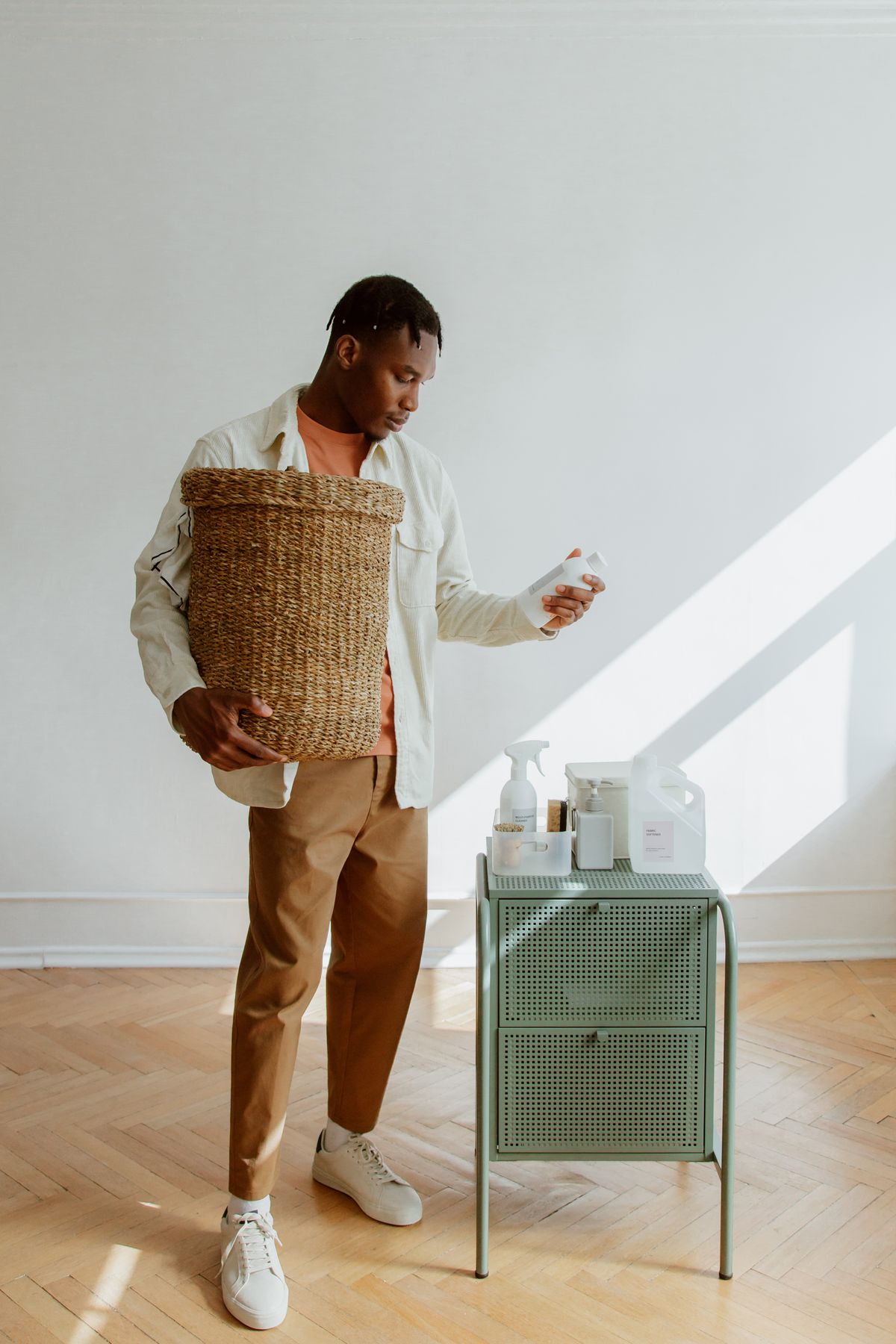
Leave products in their original labelled containers and close them as directed after use. Store them safely away from children, pets and food, respecting any temperature or separation requirements. If a label becomes unreadable or the contents are uncertain, do not guess from colour or smell. Follow local disposal guidance for the product instead of pouring unknown chemicals together. Keep the packaging available if accidental exposure occurs so appropriate advice can identify exactly what was involved.
Before you call it done
- Check both surface compatibility and exclusions.
- Follow dilution, contact time and rinsing directions.
- Keep products in their original labelled containers.
Know the limit. Never mix cleaning products or intentionally smell unknown contents. For accidental exposure, follow the label's immediate advice and obtain appropriate medical or poison-related guidance.