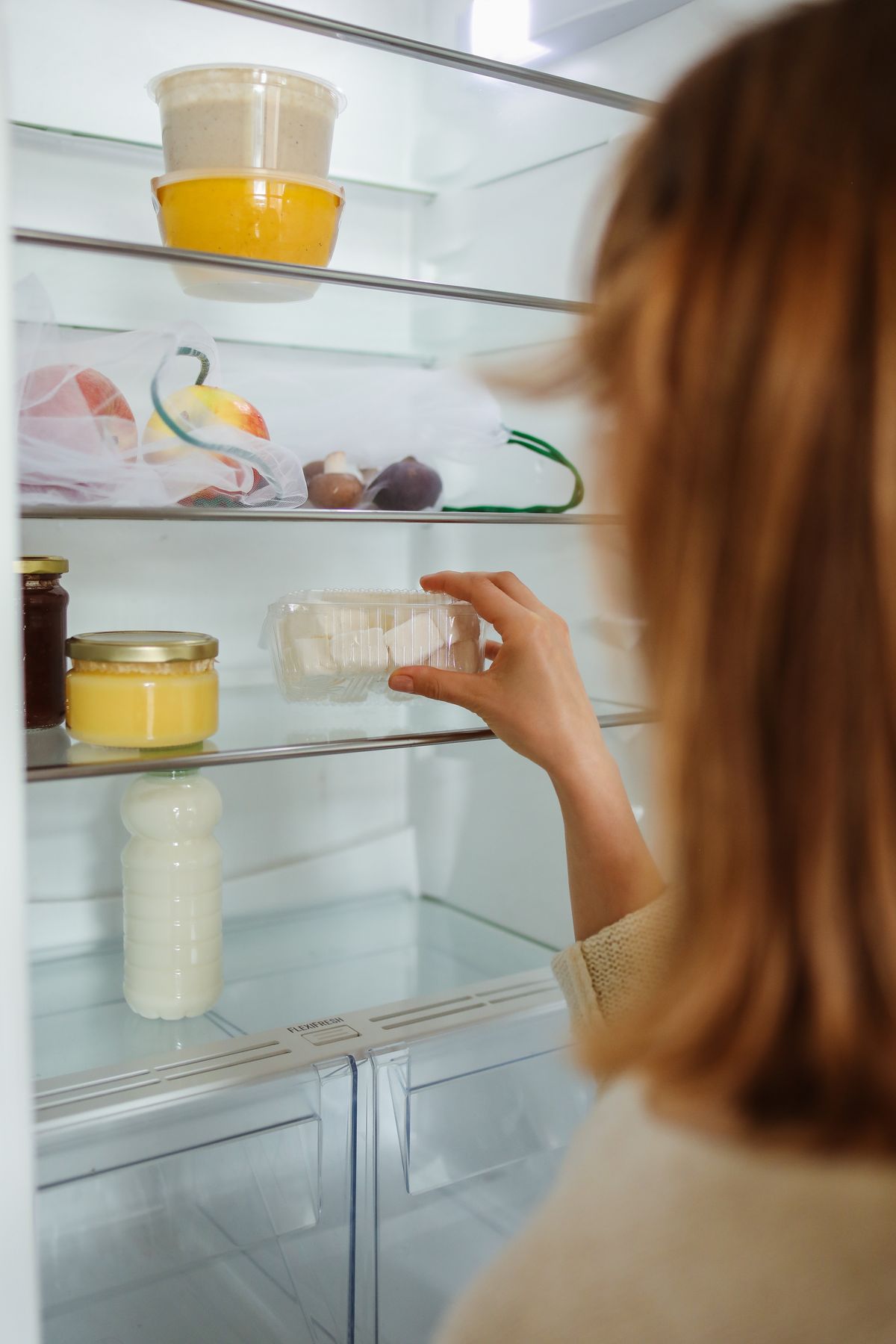
Prepare before emptying the shelf
Read the appliance manual for shutdown, removable-part and cleaning instructions. Arrange suitable chilled storage for food rather than leaving perishables on a warm worktop while you search for a cloth. Work efficiently and keep raw foods contained away from ready-to-eat items. Photograph the shelf layout if the supports are not obvious. Remove only the parts the manual identifies as user-removable, without levering stubborn trim.
Let cold glass adjust gradually
Avoid putting a cold glass shelf straight into hot water. Bosch's fridge-care guidance specifically warns about the temperature change and recommends allowing glass to reach room temperature first. Follow the actual appliance instructions for cleaning solution and handling. Support the shelf evenly in a clear sink or washing area, keeping it away from hard objects that could chip an edge. Do not assume plastic trim or a complete shelf assembly is dishwasher-safe.
Dry, inspect and refit
Remove cleaning residue as directed and dry the shelf, including accessible edges and trim. Inspect for chips or cracks before returning it to service. Refit it securely in the correct supports rather than resting it between positions. Follow the appliance instructions for restarting and returning food, including the required operating temperature. Wipe container bases before placing them back so the clean shelf is not immediately marked again. A damaged shelf should be replaced with a suitable specified part, not repaired with household adhesive.
Before you call it done
- Plan appropriate chilled storage for food.
- Avoid sudden temperature changes in glass.
- Check supports and shelf condition before loading.
Know the limit. Do not repair cracked fridge glass or remove fixed refrigeration components. If food has been held unsafely or the appliance cannot maintain temperature, seek appropriate food-safety or service advice.