Watch one slow closing movement
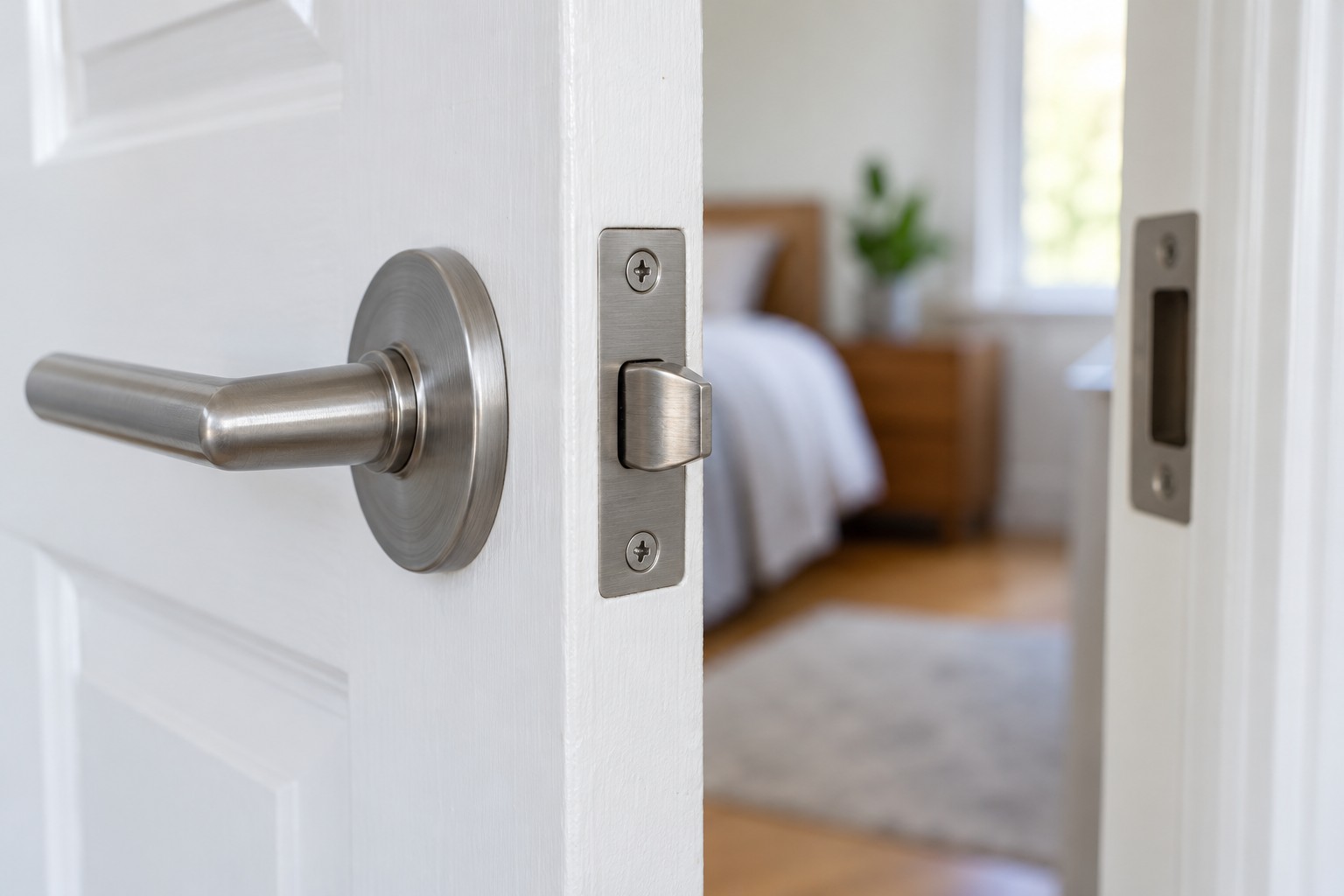
Clear the doorway, keep fingers away from the hinge gap and close the door gently. Look along the top and side gaps rather than pushing through resistance. A shiny rub mark on the edge, paint transfer on the frame or a scuffed floor can identify the contact point. Note whether the door catches only when nearly closed or throughout its swing. These observations are more useful than a general description that the door feels stiff.
Separate movement from obstruction
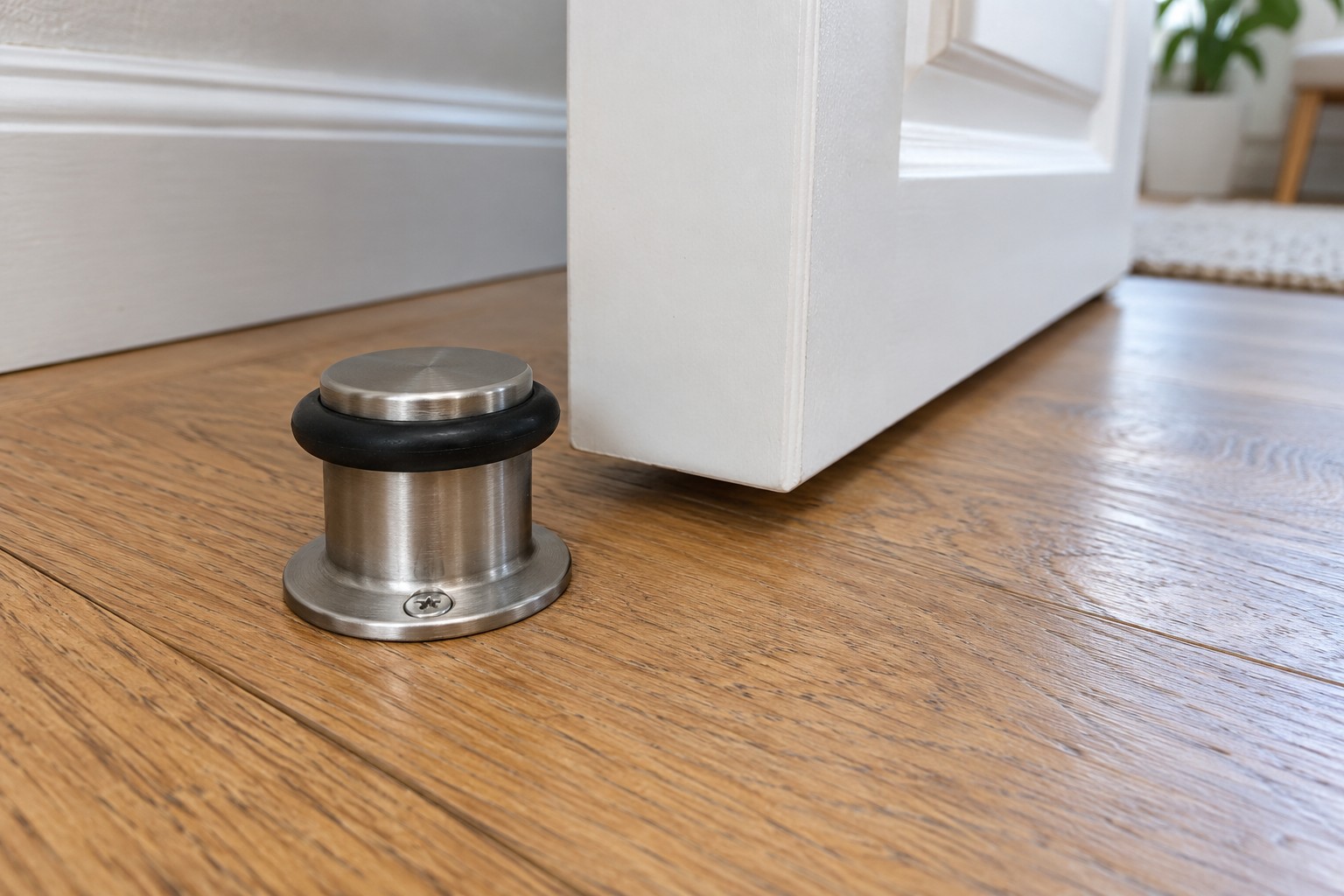
Check for a displaced rug, a loose threshold or a small object behind the door. Look at the hinge leaves with the door safely supported in its normal position. A visibly moving hinge or missing screw needs attention, but do not tighten every screw aggressively: damaged holes can become worse. Seasonal changes in timber and recent flooring can also alter clearances. Photograph the gaps now so you can compare them if the problem changes.
Choose the smallest sensible response
Remove a simple obstruction and retest. If an ordinary interior hinge fixing is only slightly loose, a correctly fitting hand screwdriver may let you snug it gently, without removing the screw or lifting the door. Stop if it spins freely. Avoid sanding, planing or moving hinges until the cause is clear, especially with old painted surfaces. A newly distorted frame, sudden severe sticking or a door that no longer closes safely deserves professional assessment rather than repeated force.
Before you call it done
- Record exactly where the edge touches.
- Check the floor covering before adjusting hardware.
- Keep a dated photograph of changing gaps.
Know the limit. Do not modify fire doors, security doors or suspected structural movement; report the issue to the responsible person.