Find the actual contact point
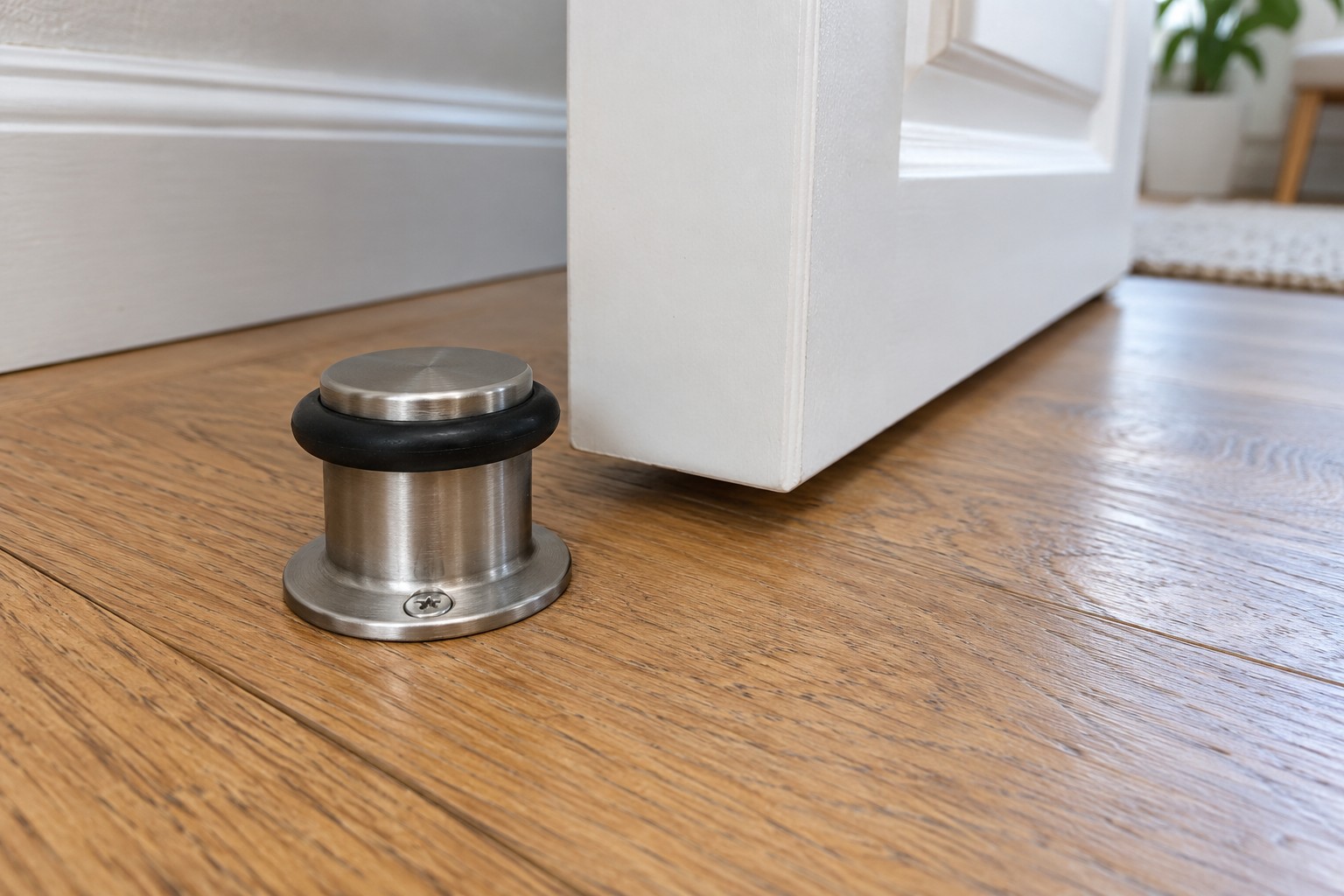
Open an ordinary interior door slowly and watch where its handle or edge approaches the wall. Check the existing bumper for split rubber, missing caps or a loose adhesive base. A mark on the wall may show that the stop is too short or incorrectly positioned. Keep fingers out of the hinge side and do not let the door swing into a window or fragile object while you inspect it.
Choose a like-for-like simple replacement
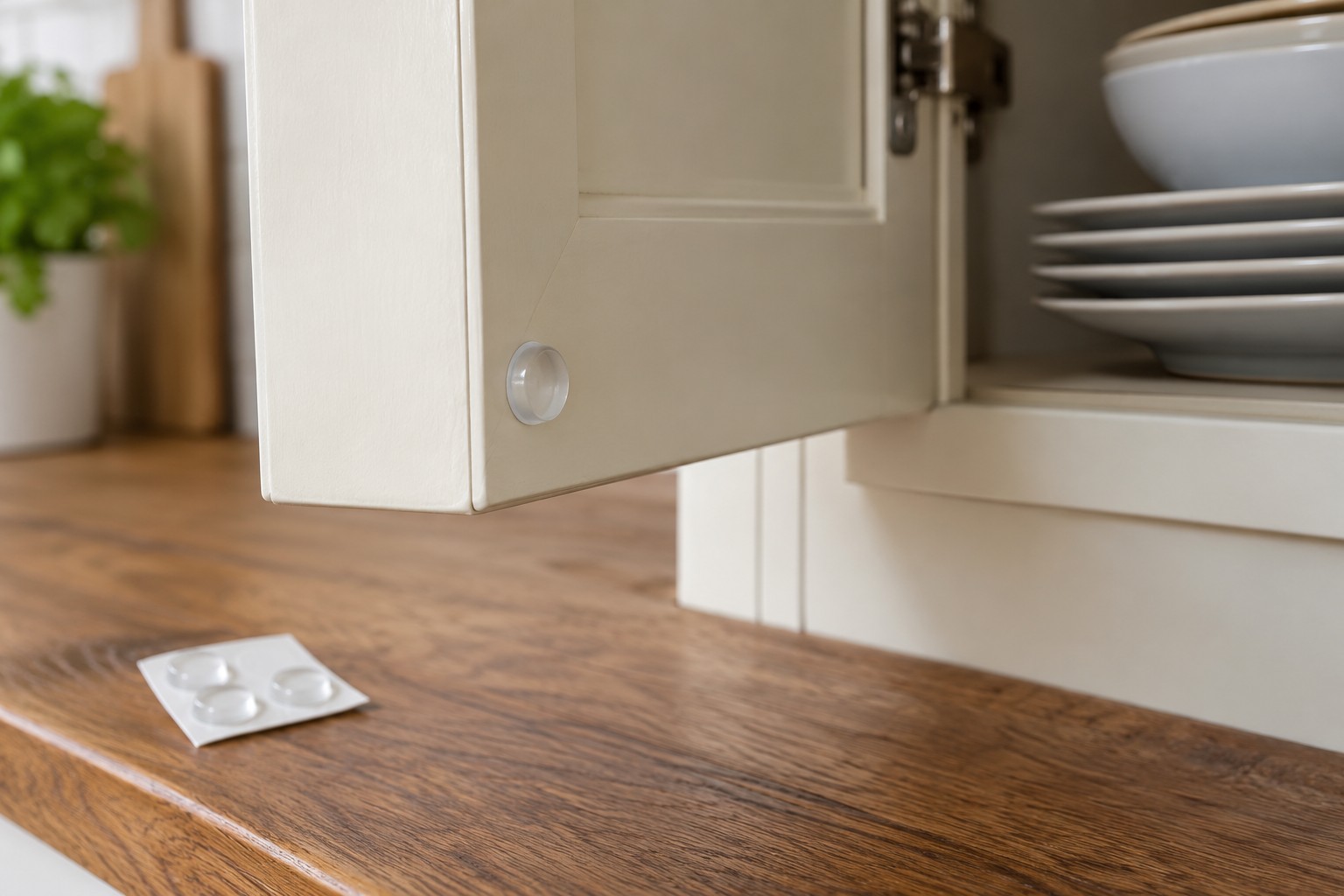
A removable bumper cap should match the original stop, while an adhesive wall pad must suit both the surface and the expected contact. Follow the product instructions for preparation and bonding time. Do not attach a new pad over peeling paint or a loose old pad. If a screw-fixed stop is loose or its mounting is damaged, identify the fixing and substrate before repair rather than simply fitting a longer screw into the same unknown hole.
Test without slamming the door
Move the door gently until it contacts the bumper and check that the handle remains clear of the wall. Make sure the stop does not create a trip hazard or prevent the door from opening as needed. Recheck adhesive pads after initial use and remove any failed piece before it is mistaken for a working stop. A bumper cushions normal contact; it cannot safely control a heavy door repeatedly blown open by wind. Resolve the cause of forceful movement rather than relying on a larger pad.
Before you call it done
- Watch which part of the door reaches the wall.
- Match replacement caps to the existing stop.
- Check the finished stop does not obstruct the route.
Know the limit. Never use a bumper to hold open a fire door or alter a required door-closing arrangement.