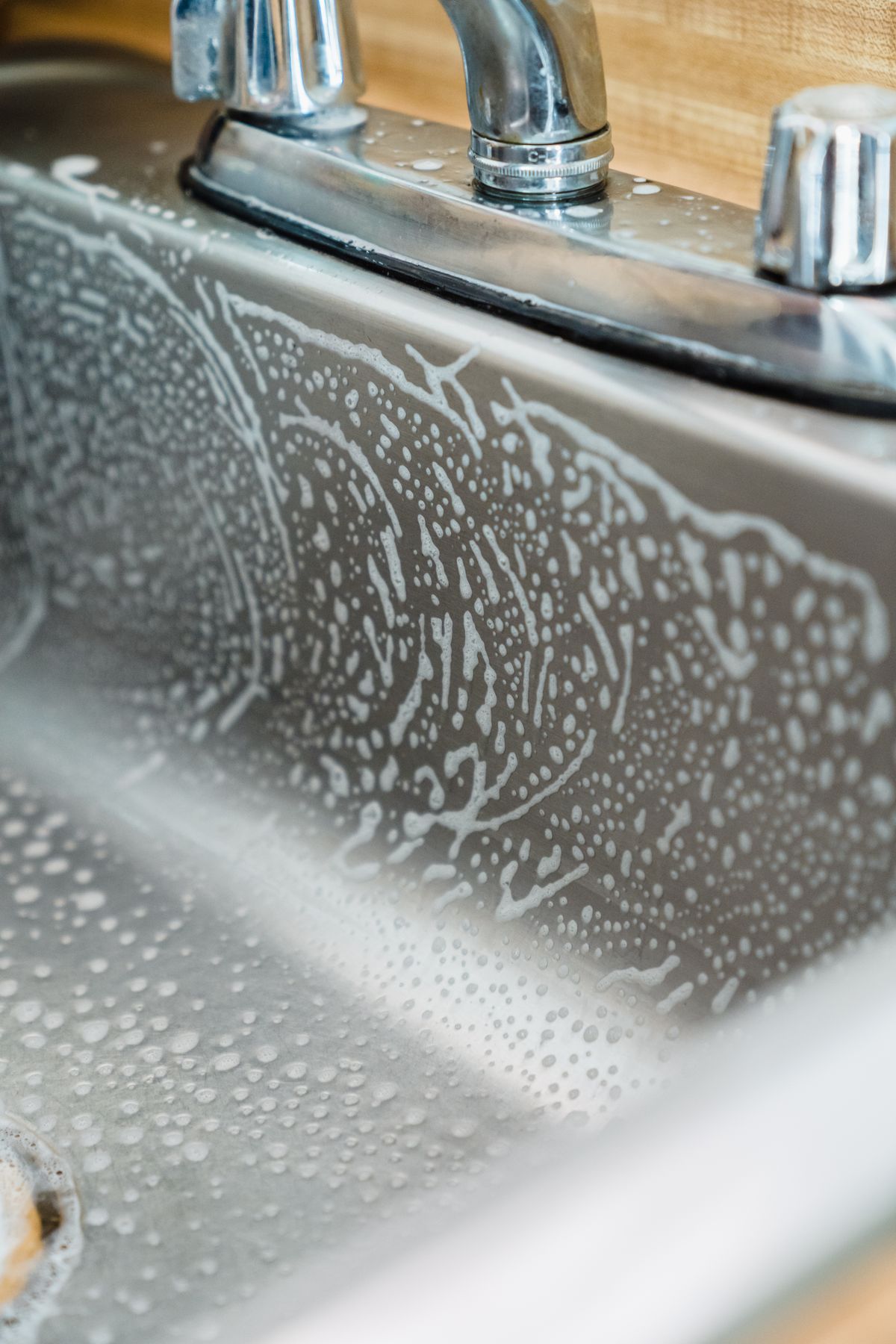
Confirm the surface and its finish
A steel-coloured appliance may have a special fingerprint-resistant coating rather than exposed stainless steel. Look up the model's care instructions before using a polish or cleaner. Identify the direction of the fine brushed lines in the metal. Remove loose crumbs with a clean soft cloth, keeping them away from seams. Check an inconspicuous area when introducing a new permitted product, especially near printed symbols or decorative trim.
Clean with controlled moisture
Use the method and dilution recommended for the finish. A lightly damp soft cloth is easier to control than spraying an appliance front generously. Wipe along the grain without pressing hard, and change to a clean area of cloth when it picks up dirt. Avoid abrasive pads, steel wool and improvised chemical combinations. Work around handles and edges carefully so liquid does not collect in joints or enter controls.
Dry and judge the result
Use a second soft cloth to remove remaining moisture, again following the grain. Inspect the surface in ordinary light before deciding it needs another product. Cloudiness can be residue from too much cleaner rather than dirt that requires stronger treatment. If the maker permits a stainless-steel care product, use it sparingly and only on the specified surfaces. Keep it off food-contact areas or coated parts unless its instructions explicitly allow those uses.
Before you call it done
- Check whether the surface has a special coating.
- Wipe with the visible brushed grain.
- Dry with a separate clean soft cloth.
Know the limit. Do not use a cleaning routine to investigate rust, damaged coatings or a fault around appliance controls. Ask the manufacturer when the finish or safety of the area is uncertain.