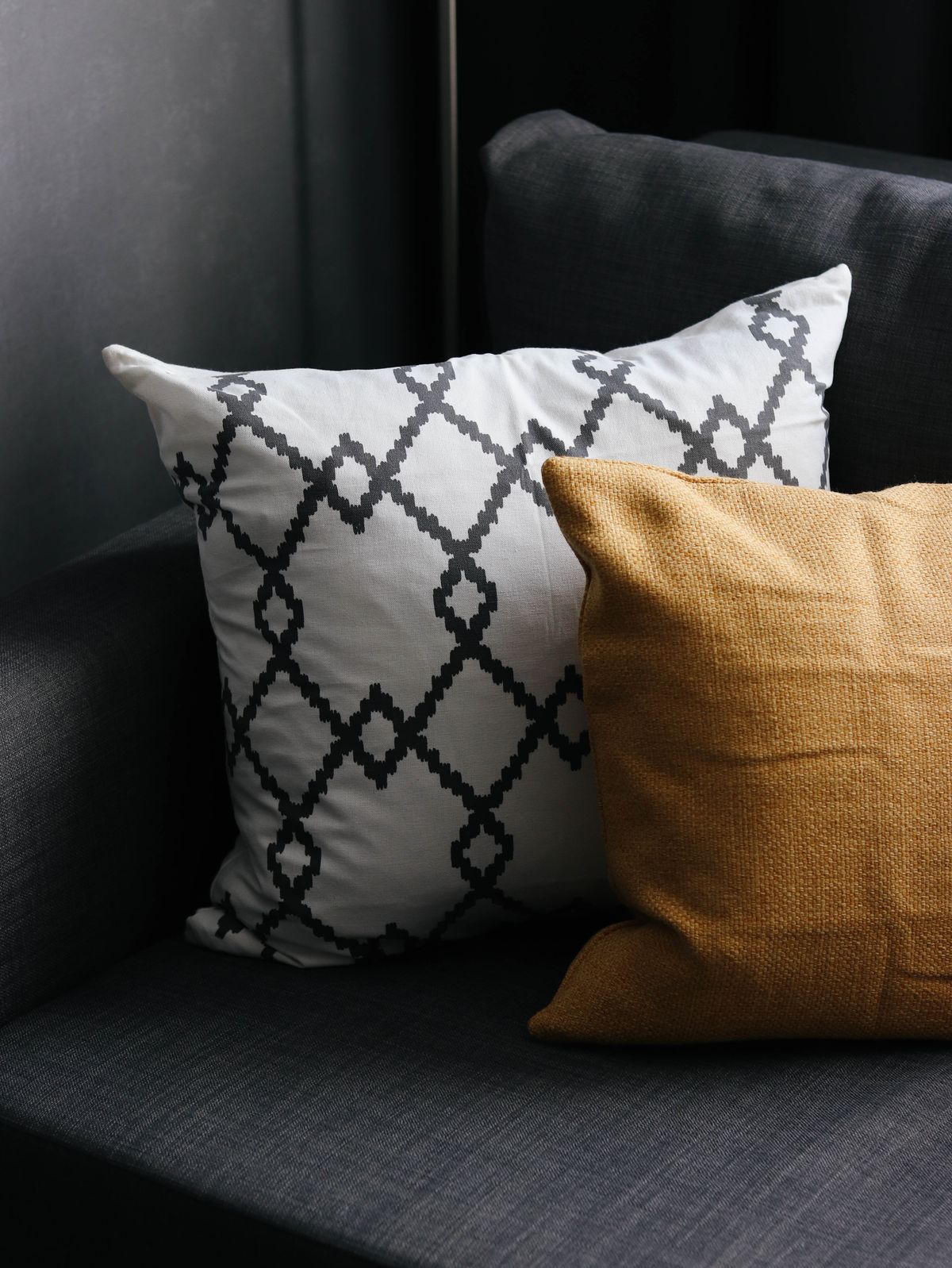
Read the cushion construction
Check the sofa care information and labels before removing covers or changing positions. Foam, fibre and feather-filled cushions behave differently, and some have a shaped front edge or a single finished face. Note which cushion belongs where before moving it. A quick photograph of the original arrangement helps with asymmetric seating. Check seams and zips for strain, and avoid pulling a cushion out by a decorative button or a small fabric tab.
Redistribute only as recommended
For fillings that permit plumping, use the maker's suggested gentle method to redistribute material towards flattened edges. Keep cushions away from sharp jewellery and rough floor surfaces while handling them. Rotate or swap positions only if the cushions are interchangeable and the care instructions allow it. Do not force a shaped cushion into another seat. If a cover has slipped, ease it back gradually rather than tugging at the zip or stretching a seam.
Look beneath the cushions too
Remove loose objects from the seating platform and check for a visibly displaced support without dismantling the sofa. Put cushions back fully seated so their edges are not trapped. Compare comfort across positions during normal use rather than jumping or pressing hard to test it. Persistent sinking, exposed internal parts or unusual frame noises are not solved by extra plumping. Contact the supplier for advice and keep care products limited to those suitable for the exact upholstery material.
Before you call it done
- Record cushion positions before rearranging them.
- Check whether each cushion can be reversed.
- Inspect seams while handling covers gently.
Know the limit. Do not open internal cushion compartments or attempt frame repairs without suitable manufacturer guidance.