Choose a practical felt and size
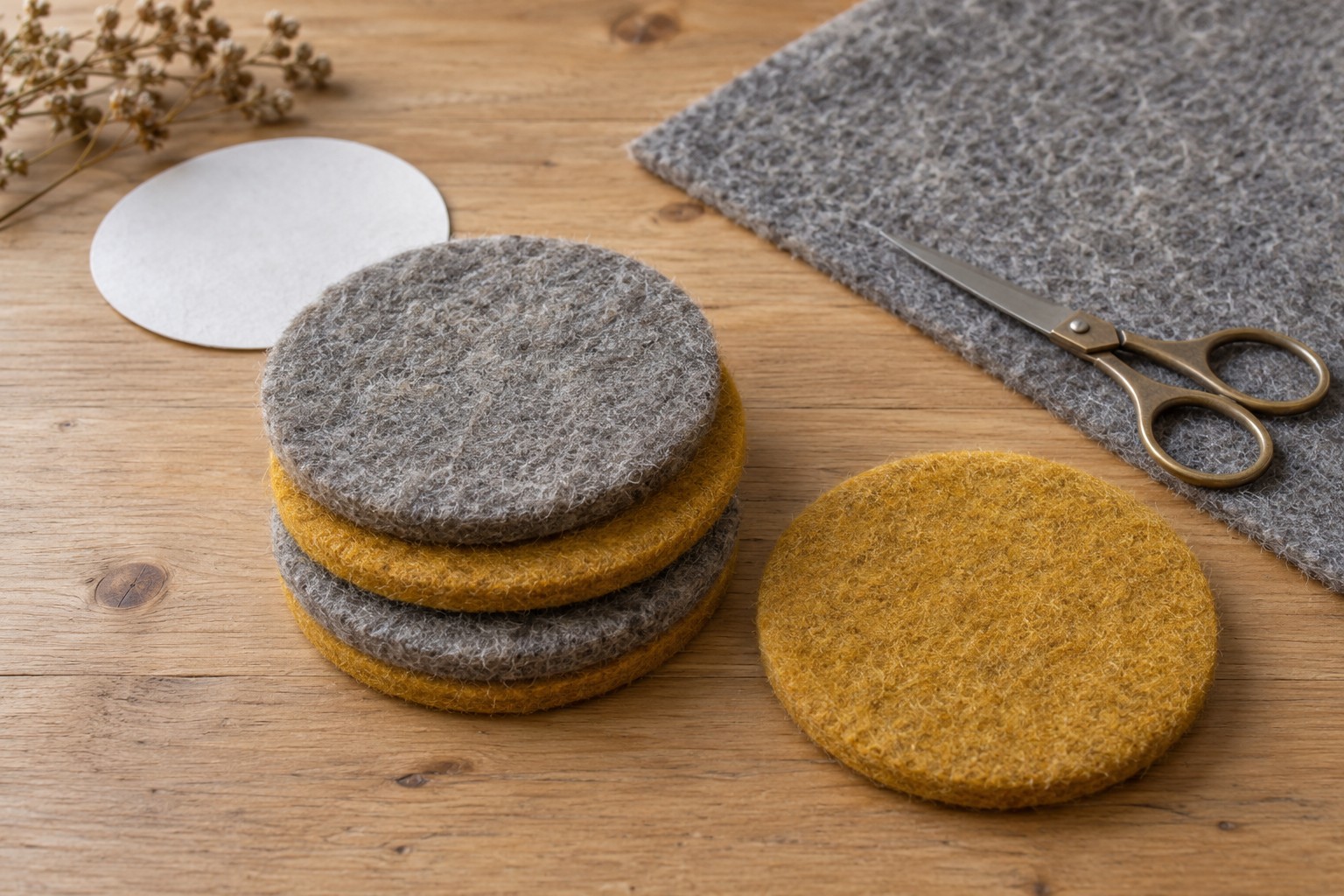
Select felt whose care and intended use are known, and avoid loose fibres or a backing that may mark the table. Check whether the material is suitable for the warmth and occasional moisture of an everyday cup. Use a familiar mug as a size reference, leaving enough space that its base does not sit on an edge. A coaster is not a trivet: do not plan to use the same small felt piece under cookware or other very hot objects.
Make one clean template
Draw a circle or rounded square on paper and cut it out as a reusable template. Place it on the felt and mark the outline lightly using a method that will not transfer to the table. Cut on a stable surface with suitable scissors, keeping fingers away from the blades. Start with one coaster and check that it lies flat. If you choose layered felt, use only an adhesive compatible with the material and let it cure fully as directed.
Test before making a matching set
Place the finished dry coaster on an inconspicuous protected test area and check for dye or adhesive transfer. Try a normal cup while watching for wobble and moisture passing through. Felt can absorb a spill without preventing it reaching the table, so remove a damp coaster promptly and dry the surface. Adjust the design before cutting the remaining set. Store coasters dry and flat, and follow the material's cleaning instructions rather than automatically soaking or machine-washing them.
Before you call it done
- Make the coaster comfortably wider than the cup base.
- Test for flatness and colour transfer.
- Remove damp coasters instead of leaving them overnight.
Know the limit. Felt coasters are not heatproof trivets and should not be used beneath pans, candles or very hot vessels.