Identify the debris before brushing
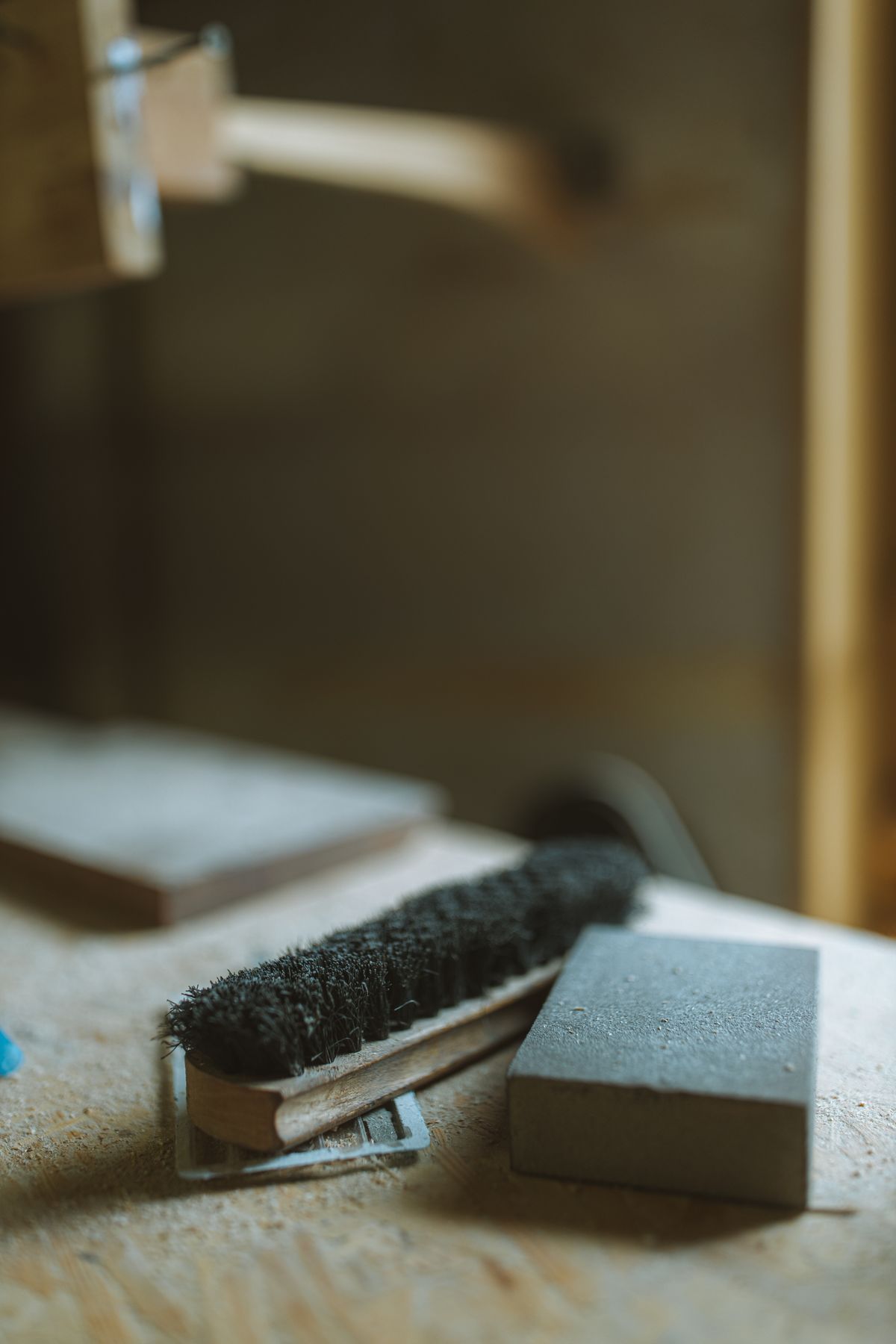
A soft bench brush can move ordinary clean wood shavings and dry household debris, but unknown renovation dust needs a different approach. Do not sweep material that might contain harmful substances or fine hazardous dust. Keep food and drinks away from the working area. Remove tools one at a time and check for sharp fragments before bringing your hand close to a dusty patch.
Contain rather than scatter
For harmless coarse debris, work slowly towards a dustpan or suitable collection point. Short strokes are easier to control than broad flicks off the edge of the bench. Use a collection method suitable for the material rather than compressed air, which can send particles into eyes and onto other surfaces. A household vacuum is not automatically appropriate for workshop dust, sharp fragments or anything hazardous; check the machine's intended use.
Finish with the surface in mind
Once loose debris is gone, wipe the bench using a method compatible with its coating. Avoid leaving a wet patch beneath timber, paper instructions or metal tools. Inspect protective mats and clamp pads too, since trapped grit can scratch the next project even when the bench itself looks clean. Keep the brush for this purpose instead of borrowing a kitchen brush. A quick clean before and after a small job is more manageable than allowing several projects' waste to accumulate.
Before you call it done
- Identify debris before choosing a cleaning method.
- Collect with short, controlled brush strokes.
- Check mats and pads for trapped grit.
Know the limit. Do not brush unknown building dust, suspected asbestos, lead-containing debris or hazardous powders. Leave the area undisturbed and obtain suitable professional advice.