Start with a dry, clear worktop
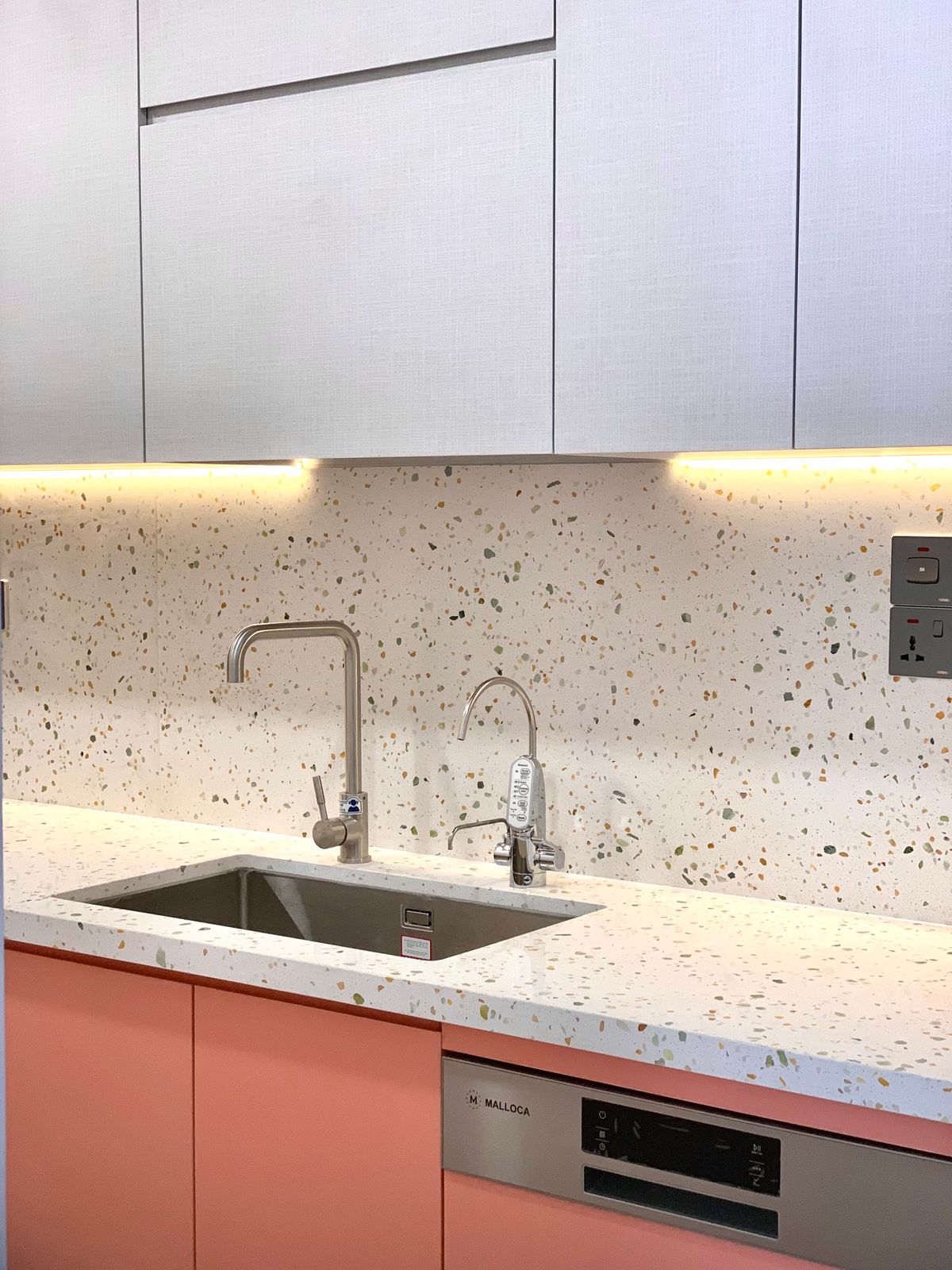
Move small items away and dry the area so you can see the joint properly. Inspect the join between sections, edging strips and the junction with the wall. Look for raised lips, darkening, a rough swollen edge or sealant that has separated. Photograph changes rather than scraping them with a knife. Different worktop materials have different care and repair systems, so identify the surface before choosing any treatment.
Notice where water repeatedly sits
Watch your normal washing-up routine and see whether a draining board, wet sponge or appliance tray keeps the joint damp. Reposition loose items so water does not remain against vulnerable edges. Wipe splashes promptly with the surface's permitted cleaning method and dry them afterwards. Do not seal over a visibly wet or swollen joint in the hope of locking the problem away. Avoid tightening sink or worktop fittings without the right installation information.
Escalate damage while it is still clear
Report a lifting edge or recurring damp patch with its location and photographs. A joint may require a material-specific repair, and damaged composite board will not necessarily return to its original shape after drying. If water is escaping into cupboards, stop the activity causing it and arrange assessment. Continue gentle surface care, but avoid abrasive sanding or strong chemicals that could remove useful evidence and worsen the finish. A neat repair should address the water route as well as the visible line.
Before you call it done
- Inspect joints when the surface is dry.
- Move persistently wet accessories away from edges.
- Record swelling before covering the area.
Know the limit. Do not alter sink plumbing or assume surface resealing will fix an active leak.