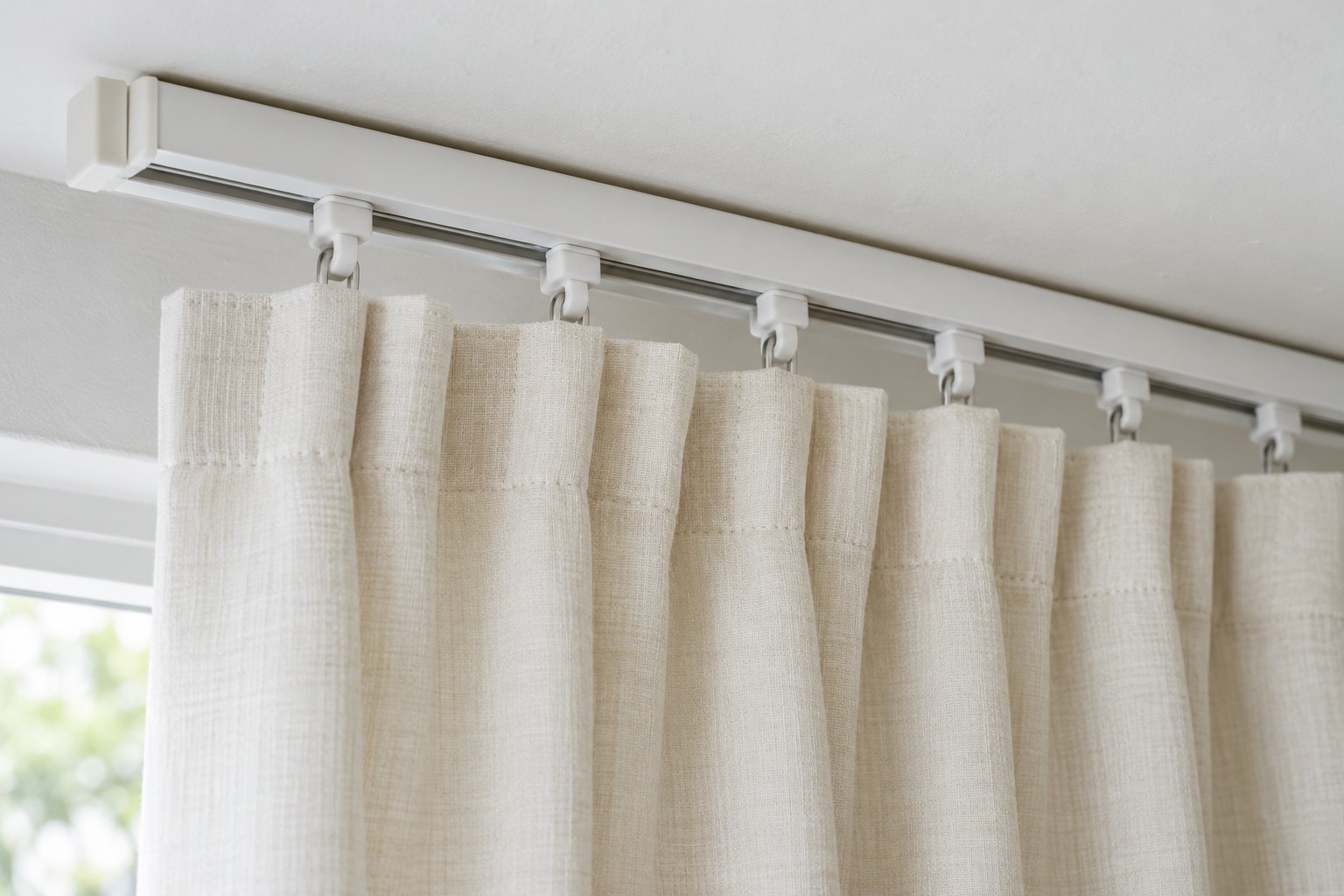
Observe the blind's normal operation
Move the control gently in its intended direction and stop at the first unusual resistance. Look for a slat caught behind a handle, a trapped fabric item or a visibly bent edge. Do not pull harder to release a jam. Record whether the problem affects lifting, lowering or tilting, because those movements can involve different parts. Keep young children and pets away from the control area while you inspect it.
Protect the cord-safety arrangement
Check that any fitted cord or chain safety device remains secure and used as instructed. Do not remove it for easier access or tie cords into improvised loops. Follow the blind manufacturer's guidance if a control line is damaged or detached. Surface dust can be removed with the permitted gentle method, but cleaning is not a reason to unthread cords or open the headrail mechanism. Avoid bending slats backwards to make them look straight.
Decide between a simple obstruction and repair
Remove only a loose item that can be safely reached without stretching or climbing on furniture. Retest gently and stop if the blind twists or moves unevenly. A broken cord, loose bracket or persistent jam needs the correct spare part or professional repair. Keep the product details and photographs ready when contacting the supplier. If the blind cannot be used safely, secure the area and arrange prompt attention rather than leaving dangling components accessible.
Before you call it done
- Identify which movement is affected.
- Keep fitted cord-safety devices in place.
- Stop at resistance rather than increasing force.
Know the limit. Damaged cords and loose overhead fittings need proper repair; do not dismantle the blind mechanism.