Look closely before selecting a bit
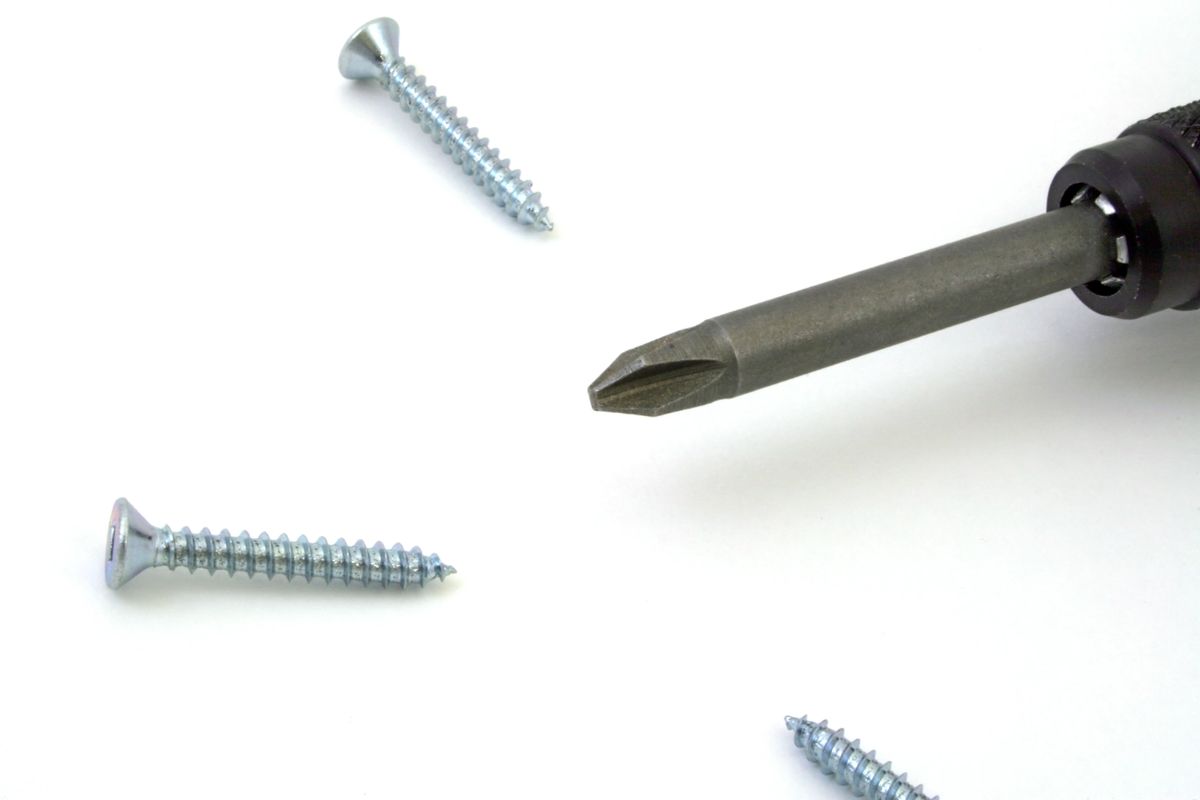
Phillips and Pozidriv heads can look similar at a glance. A Pozidriv recess commonly has additional smaller marks between the main cross arms, but wear and paint can obscure them. Use the packaging or assembly instructions when available. Driver markings such as PH2 and PZ2 identify different profiles, not interchangeable names for a medium cross-head. Take good light to the screw rather than guessing from arm's length.
Check the fit without turning
Try the clean driver tip in the recess with no force. It should sit securely, with little rocking and without balancing on its point. A tip that looks almost correct can still damage the head once pressure is applied. Inspect the bit for rounded wings or chips. Replace a worn tip rather than pushing harder. For furniture supplied with specific fixings, use the stated size and profile even if another driver initially appears to fit.
Keep the driver aligned
Support the item so you can work squarely to the screw. Turn slowly by hand for delicate fittings and stop when the part is seated according to its instructions. If the driver slips out, pause and reassess the profile, size and alignment. Repeated slipping is a warning, not a signal to increase force. Once a recess has become rounded, avoid improvised attempts that could injure your hand or destroy a removable fitting; choose an appropriate repair route instead.
Before you call it done
- Read PH or PZ markings on the driver.
- Test the fit before applying torque.
- Stop after the first unexplained slip.
Know the limit. This guide covers ordinary accessible furniture fixings. Never use a screwdriver on electrical equipment, live fittings or a sealed appliance as part of this routine.